

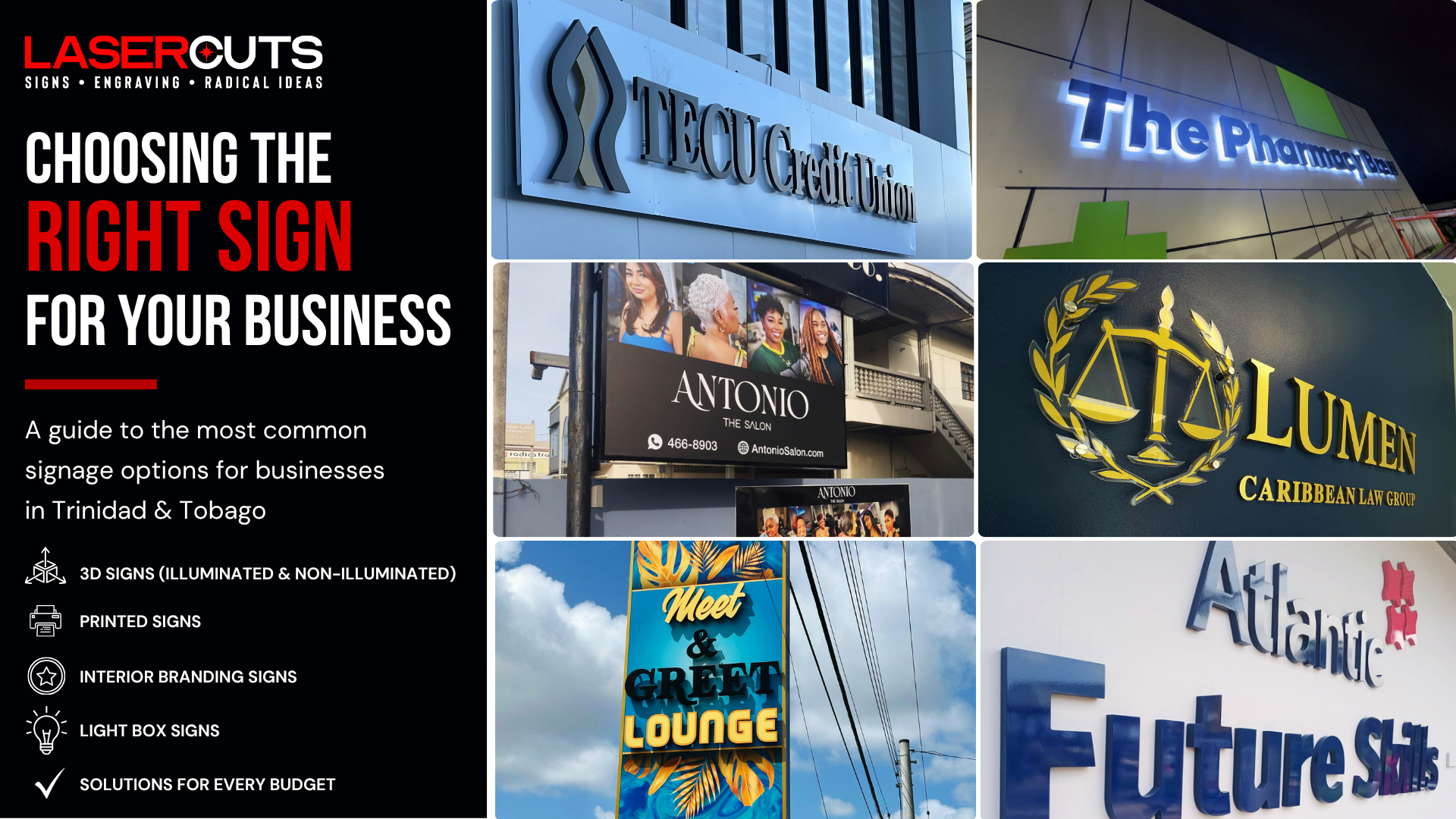
Choosing the right sign for your business can be challenging, especially if you’re not familiar with the different signage options available.
Many customers contact us knowing what they want to achieve, such as better visibility, stronger branding, a more professional appearance, or a replacement for an existing sign, but are unsure which type of sign is best suited to their project.
In this guide, we’ll discuss some of the common mistakes businesses make when choosing signage, the factors that influence our recommendations, and some of the popular signage options available to help you make a more informed decision.
Common Mistakes Businesses Make When Choosing Signage
After working on hundreds of signage projects for businesses, offices, schools, industrial facilities, and government organizations, we’ve noticed a few common mistakes that can affect the effectiveness of a sign.
Choosing Based Solely On Price
Price is naturally an important factor, but the lowest quotation does not always represent the best long-term value. The durability of a sign depends on the materials used, fabrication methods, finishing processes, and installation quality. A lower-priced sign that fades, deteriorates, or requires replacement sooner can ultimately become more expensive than investing in a higher-quality solution from the start.
Making Designs Too Busy
A sign only has a few seconds to communicate its message. Whether someone is driving past, walking through a plaza, or viewing a building from across a parking lot, overly busy designs can become difficult to read and process. In many cases, a cleaner and simpler design creates a stronger visual impact.
Underestimating Sign Size
One of the most common challenges is visualizing dimensions. A customer may feel that a 4 ft × 4 ft sign sounds large enough, only to discover that it appears much smaller once installed high above ground level or viewed from a distance. This is particularly common with outdoor signage, where visibility can be affected by viewing distance, traffic speed, and surrounding buildings.
Not Every Logo Works Perfectly In 3D
Some logos translate beautifully into dimensional signage, while others contain fine details, gradients, photographs, or intricate design elements that can be difficult to reproduce effectively in raised lettering. In these situations, a hybrid approach that combines printed and dimensional elements, or a simple flat printed sign may produce a more practical and visually appealing result.
How We Help Customers Choose
Many customers already have an idea of the style they like before contacting us. They may have seen an example on our website, social media pages, or elsewhere online.
From there, our role is to determine whether that option is suitable for the location, budget, installation requirements, and artwork involved in the project.
When discussing a signage project, we typically consider:
- The size of the sign
- Where the sign will be installed
- The available mounting surface
- The customer’s logo or artwork
- Whether the customer prefers a lit or non-lit sign
- Budget considerations
- Installation requirements
Sometimes a customer may initially prefer a 3D sign but later decide that a printed sign is more suitable based on budget considerations. In other situations, a customer may choose a printed sign and later decide to upgrade to dimensional signage after reviewing additional examples.
We may also ask customers to send a photo of the installation area. This helps us better understand the space and recommend practical options based on the project’s requirements.
Not sure which option is right for your business?
Contact our team for a free consultation and quotation.
Once we’ve discussed the project requirements, the next step is exploring the signage options available. While every project is different, the following are some of the most common types of signs businesses choose and the situations where each option is often used.
3D Signs: For Strong Visual Impact
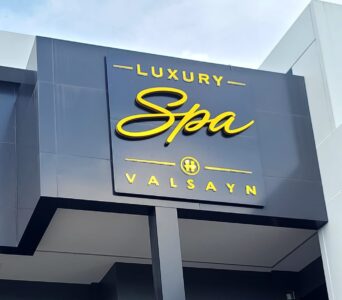
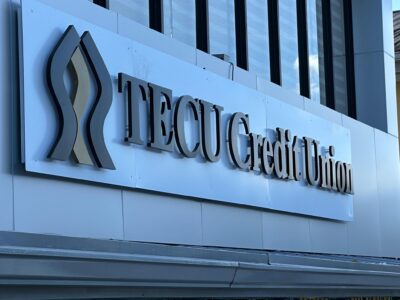
3D signs are one of the most popular options for businesses that want a professional, established, and noticeable appearance.
Customers often choose 3D signage when they want their business to stand out beyond what a flat printed sign can achieve. The raised letters and logos create depth, helping the sign feel more premium and visually impactful.
These signs are sometimes also referred to as routed signs, raised signs, or dimensional signs because the letters and logos are precision cut from materials such as PVC, acrylic, aluminium composite, or other substrates before being mounted individually or onto a backing panel.
However, 3D signage is not always the best option for every project. Depending on the size required, budget, installation requirements, and complexity of the artwork, a printed sign or hybrid sign may sometimes provide a more practical solution.
3D signs can also be produced as either illuminated or non-illuminated signs depending on the visibility requirements and desired appearance.
Illuminated 3D Signs: For Day and Night Visibility
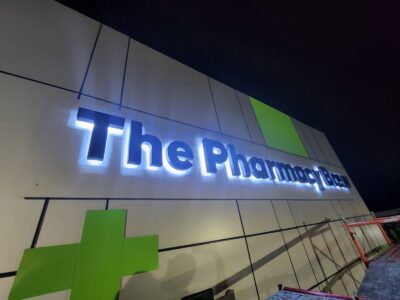
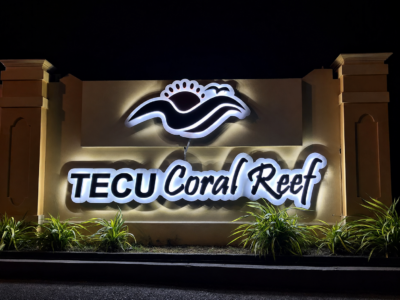
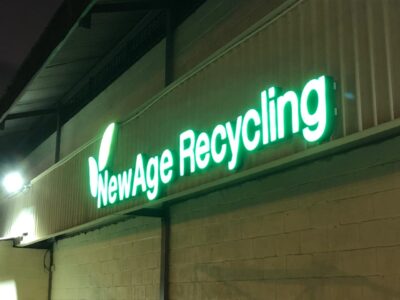
For businesses that want the premium appearance of a 3D sign while also improving visibility after dark, illuminated 3D signage is often a popular choice.
These signs typically incorporate LED lighting within or behind fabricated letters to create a distinctive illuminated effect at night while still maintaining a professional appearance during the day.
Businesses often consider illuminated signage when they operate into the evening, are located along busy roadways, or simply want a stronger visual presence.
While illuminated signs generally require a larger investment than non-illuminated options, many businesses feel the additional visibility and impact make them worthwhile, particularly in high-traffic commercial areas.
The final appearance can vary significantly depending on the lighting method, materials, sign size, and installation location.
Printed Signs: Practical, Versatile and Cost-Effective
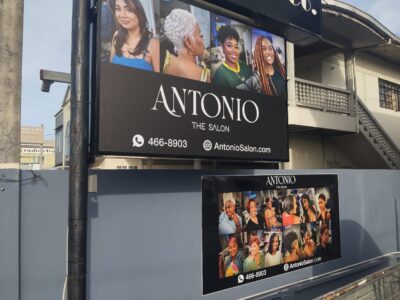
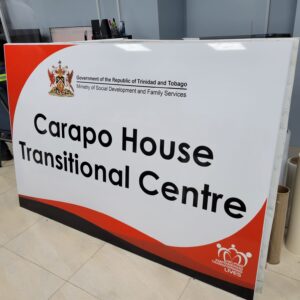
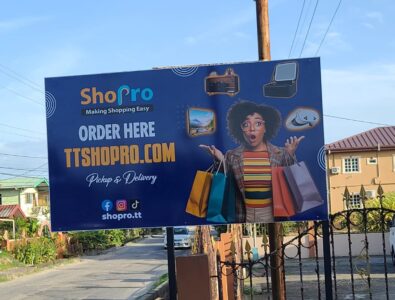
One of the main reasons customers choose a flat printed sign is cost. In many cases, a flat sign can provide a professional appearance at a lower investment than a comparable 3D sign, making it a popular option for new businesses, promotional signage, temporary signage, and projects with tighter budgets.
Flat printed signs are also one of the most versatile signage options available. They are often recommended when a logo or design contains photographs, gradients, detailed graphics, product images, contact information, or other elements that would be difficult or costly to reproduce entirely using dimensional lettering.
These signs are commonly produced on materials such as aluminum composite panels, PVC, acrylic, banner vinyl, and other substrates depending on the application.
In some cases, customers initially request a fully dimensional sign but later discover that a printed sign or a combination of printed and raised elements achieves a similar visual result while remaining within budget.
Interior Branding Signs: For Offices and Professional Spaces
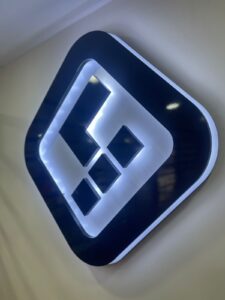
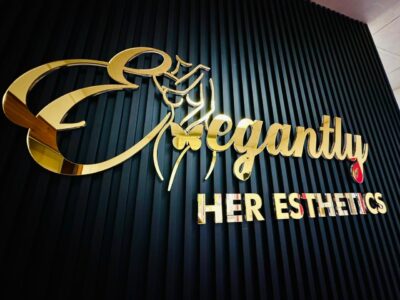
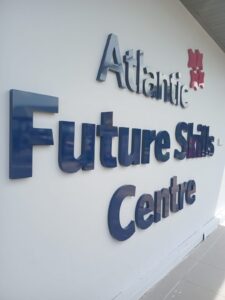
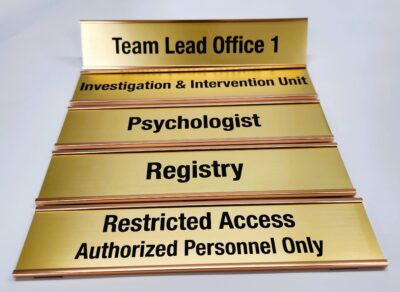
Signage is not only important outside a building.
Many businesses, professional offices, and organizations use interior branding signs to create a stronger first impression for customers, visitors, and staff.
These signs can include raised lettering, acrylic panels, wall-mounted logos, printed graphics, mission statements, reception signs, and other branded displays.
The best option often depends on the appearance the customer wants to achieve. Some businesses prefer a simple wall-mounted logo, while others choose more layered designs incorporating acrylic panels, standoffs, 3D lettering, or multiple materials.
Interior branding is often one of the finishing touches that helps a space feel complete and reinforces the company’s identity throughout the customer experience.
Light Box Signs: For Full-Face Illumination
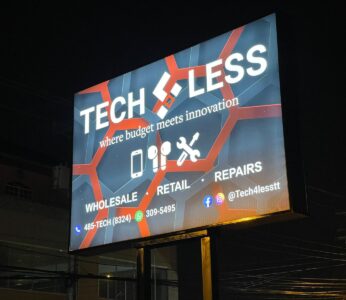
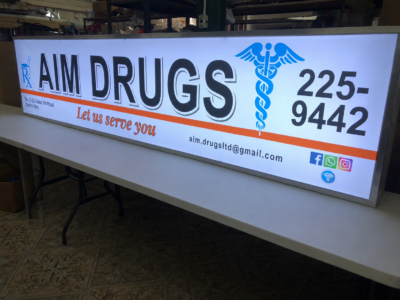
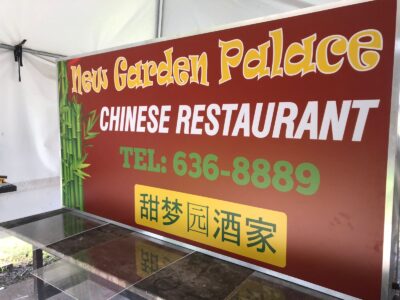
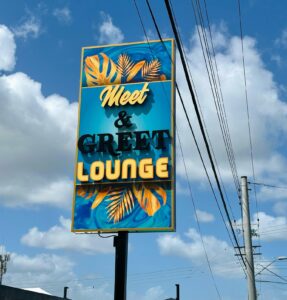
Light box signs are another popular illuminated signage option, particularly when a customer wants an entire sign face to illuminate rather than individual letters.
These signs typically consist of an internal frame with lighting and a translucent printed face, often using Panaflex material or similar substrates.
Unlike illuminated 3D signs, which highlight individual letters or logos, light boxes illuminate the complete graphic surface. This makes them particularly useful for businesses that rely heavily on logos, branding colours, images, or more detailed visual designs.
The choice between a light box and illuminated 3D signage often comes down to the desired visual style, and the customer’s budget.
Ready To Discuss Your Signage Project?
Whether you’re opening a new business, replacing an existing sign, upgrading your branding, or exploring options for a new location, our team can help.
Complete the form below and tell us about your project. If possible, include a photo of the installation area along with any artwork, logo files, or reference images you may have.
We’ll review your requirements and help you determine the most suitable signage options for your project.